
Weld metal is a critical industrial material that directly determines joint strength, production stability, and long-term structural reliability. For your business, selecting the right weld metal is not about short-term cost, but about ensuring consistent manufacturing output, reducing defect risk, and supporting large-scale industrial operations. In B2B supply chains, controlled quality and repeatable performance make this product a cornerstone for importers, wholesalers, distributors, and industrial brand owners.
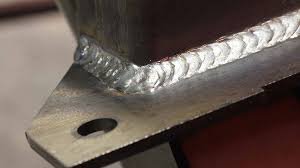
Industrial usage that ensures continuous demand
Across global industries, welding operations rely on stable filler materials to maintain structural integrity. Construction projects depend on them for frameworks, pipelines, and load-bearing connections. Manufacturing plants use them in machinery assembly, equipment repair, and component fabrication.
Because these sectors operate continuously, demand remains stable throughout the year. As a result, this category offers predictable turnover and long-term supply potential for professional buyers.
How professional buyers evaluate welding materials
In B2B procurement, buyers focus on performance data rather than marketing claims. Mechanical strength, ductility, crack resistance, and consistency across batches are primary decision factors.
Therefore, supplying reliable material positions your business as a technical solution provider rather than a commodity seller. This approach strengthens trust and supports repeat procurement cycles.
Chemical composition and performance control
Controlled chemistry is the foundation of stable welding performance. Carbon levels, alloying elements, and impurity limits all influence hardness, toughness, and resistance to cracking.
When composition remains stable from batch to batch, welding parameters stay consistent. This reduces rework, minimizes scrap rates, and improves productivity for professional users.
Mechanical properties and joint reliability
Industrial users rely on predictable mechanical properties to ensure joint safety. Tensile strength supports load-bearing performance, while elongation and impact resistance prevent brittle failure under stress.
Consistent results protect buyers from costly downtime and structural risks, making quality stability a decisive factor in bulk purchasing.
Compatibility with base materials
Professional welding operations involve various grades of carbon and low-alloy steels. Filler material must match base material properties to avoid issues such as excessive hardness or cracking.
By ensuring metallurgical compatibility, you help buyers standardize processes and reduce operational risk across different projects.
Process adaptability in industrial environments
Stable welding materials perform reliably across manual and semi-automatic processes. Smooth arc behavior, controlled slag formation, and clean bead appearance improve operator efficiency.
As a result, production speed increases while defect rates decrease, directly supporting cost control for industrial users.
Manufacturing consistency and batch repeatability
High-quality production relies on standardized raw materials, precise formulation, and controlled thermal processing. These factors ensure uniform performance across large volumes.
For your business, repeatability simplifies quality management and strengthens buyer confidence in long-term supply agreements.
Quality control expectations in bulk supply
Professional buyers expect documented quality systems. Typical controls include chemical analysis, mechanical testing, and performance verification under standardized conditions.
Clear quality documentation accelerates purchasing decisions and reduces disputes, making cooperation smoother and more predictable.

Packaging and logistics protection
Packaging plays a key role in preserving material integrity during storage and transport. Moisture protection, structural stability, and clear labeling prevent contamination and handling damage.
Efficient packaging also improves container utilization, lowering logistics cost per unit and simplifying warehouse operations for distributors.
Bulk purchasing value for professional buyers
This industrial material is consumed in high volumes. Bulk procurement lowers unit cost, stabilizes supply, and improves production planning accuracy.
For wholesalers and distributors, volume purchasing supports competitive pricing while maintaining healthy margins and reliable availability.
OEM cooperation for brand positioning
OEM manufacturing allows supply under your own brand identity. Packaging design, labeling, and specification alignment can be customized to match your market strategy.
Private branding strengthens recognition and builds buyer loyalty, especially in competitive industrial markets.
ODM development for application-specific requirements
ODM cooperation enables deeper technical adaptation. Composition and performance characteristics can be adjusted to meet specific working environments or regulatory requirements.
This capability allows you to offer tailored solutions, differentiating your offering from standard market products.
Global market adaptability
Industrial demand exists across infrastructure-driven, manufacturing-focused, and maintenance-oriented markets. While applications vary, the need for stable and predictable welding performance remains universal.
Maintaining core quality while adjusting specifications allows efficient expansion into multiple regions.
Total cost of ownership for industrial users
Professional buyers evaluate materials based on long-term operational impact. Stable performance reduces defect rates, rework time, and energy consumption.
Lower total operating cost encourages repeat orders and long-term supply partnerships.
Sustainability through efficiency and consistency
Consistent welding performance reduces waste and improves production yield. Efficient use of materials supports responsible manufacturing practices and long-term resource management.
Stable supplier relationships also support better production planning and reduced environmental impact.
After-sales stability and risk reduction
Reliable materials minimize complaints and technical disputes. This stability protects margins and reduces after-sales workload for your business.
For distributors, fewer issues mean stronger downstream relationships and improved reputation.
Strategic role in an industrial product portfolio
Including this category in your portfolio positions your business at the center of industrial manufacturing supply. It complements welding equipment and accessories, enabling cross-selling and higher order values.
This strategic positioning strengthens your competitiveness in professional markets.
Scalable supply and long-term cooperation
Reliable manufacturers support growth with scalable capacity, consistent quality, and transparent communication. As demand increases, performance remains stable across volumes.
This scalability enables your business to expand confidently without sacrificing reliability.
Risk management and supply chain resilience
Stable quality reduces production interruptions and process variability. Predictable performance allows buyers to standardize workflows and reduce operational uncertainty.
For your business, this reliability enhances credibility and long-term market trust.
Final value perspective for B2B buyers
Weld metal is a foundational industrial material that determines structural integrity, productivity, and operational reliability. For importers, wholesalers, distributors, and industrial brand owners, it represents a high-consumption, technically driven product with continuous demand. By focusing on controlled chemistry, consistent manufacturing, bulk supply efficiency, and OEM or ODM cooperation, you secure a solution that delivers predictable performance and supports sustainable B2B growth across global industrial markets.